Scaling CPBL Convening 2026
A two-day convening of curriculum publishers and professional learning providers focused on strengthening partnerships to scale high-quality, curriculum-aligned professional learning.
Participants left with new connections, clearer strategies, and concrete next steps to advance scalable, evidence-based solutions for districts.
Key Outcomes from the Convening

Stronger Partnerships
Participants built new relationships and deepened trust across organizations working toward shared goals.
'%3e%3cpath%20d='M10.0081%2027.754L16.3017%2021.4603L20.4287%2025.5873L27.7541%2018.3135V21.5635H31.8811V11.246H21.5636V15.373H24.8136L20.4287%2019.7579L16.3017%2015.6309L7.11919%2024.8651L10.0081%2027.754ZM5.0557%2038.0714C3.92077%2038.0714%202.94921%2037.6673%202.14101%2036.8591C1.33281%2036.0509%200.928711%2035.0794%200.928711%2033.9444V5.05554C0.928711%203.92062%201.33281%202.94906%202.14101%202.14086C2.94921%201.33266%203.92077%200.928558%205.0557%200.928558H33.9446C35.0795%200.928558%2036.0511%201.33266%2036.8593%202.14086C37.6675%202.94906%2038.0716%203.92062%2038.0716%205.05554V33.9444C38.0716%2035.0794%2037.6675%2036.0509%2036.8593%2036.8591C36.0511%2037.6673%2035.0795%2038.0714%2033.9446%2038.0714H5.0557ZM4.02395%2034.9762H34.9763V4.0238H4.02395V34.9762Z'%20fill='%23725CA8'/%3e%3c/g%3e%3cdefs%3e%3cclipPath%20id='clip0_2449_2717'%3e%3crect%20width='39'%20height='39'%20fill='white'/%3e%3c/clipPath%3e%3c/defs%3e%3c/svg%3e)
Clearer Strategies for Scale
Teams refined value propositions, service models, and partnership structures—including 80/20 approaches to standardization.
'%3e%3cpath%20d='M3%2033.4286V5.57142V30.1786V26.0928V33.4286ZM3%2036.2143C2.2%2036.2143%201.5%2035.9357%200.9%2035.3786C0.3%2034.8214%200%2034.1714%200%2033.4286V5.57142C0%204.82856%200.3%204.17856%200.9%203.62142C1.5%203.06428%202.2%202.78571%203%202.78571H33C33.8%202.78571%2034.5%203.06428%2035.1%203.62142C35.7%204.17856%2036%204.82856%2036%205.57142V23.6786H33V5.57142H3V33.4286H20V36.2143H3ZM29.1%2038.0714L22.6%2032.0357L24.7%2030.0393L29.1%2034.125L37.85%2026L40%2027.95L29.1%2038.0714ZM10.05%2020.475C10.35%2020.1964%2010.5%2019.8714%2010.5%2019.5C10.5%2019.1286%2010.35%2018.8036%2010.05%2018.525C9.75%2018.2464%209.4%2018.1071%209%2018.1071C8.6%2018.1071%208.25%2018.2464%207.95%2018.525C7.65%2018.8036%207.5%2019.1286%207.5%2019.5C7.5%2019.8714%207.65%2020.1964%207.95%2020.475C8.25%2020.7536%208.6%2020.8928%209%2020.8928C9.4%2020.8928%209.75%2020.7536%2010.05%2020.475ZM10.05%2012.8607C10.35%2012.5821%2010.5%2012.2571%2010.5%2011.8857C10.5%2011.5143%2010.35%2011.1893%2010.05%2010.9107C9.75%2010.6321%209.4%2010.4928%209%2010.4928C8.6%2010.4928%208.25%2010.6321%207.95%2010.9107C7.65%2011.1893%207.5%2011.5143%207.5%2011.8857C7.5%2012.2571%207.65%2012.5821%207.95%2012.8607C8.25%2013.1393%208.6%2013.2786%209%2013.2786C9.4%2013.2786%209.75%2013.1393%2010.05%2012.8607ZM15.6%2020.8928H27.8V18.1071H15.6V20.8928ZM15.6%2013.2786H27.8V10.4928H15.6V13.2786Z'%20fill='%23725CA8'/%3e%3c/g%3e%3cdefs%3e%3cclipPath%20id='clip0_2450_2722'%3e%3crect%20width='39'%20height='39'%20fill='white'/%3e%3c/clipPath%3e%3c/defs%3e%3c/svg%3e)
Actionable Next Steps
Partners left with concrete plans to improve alignment, governance, and go-to-market strategies.

Shared Learning Across the Field
Attendees surfaced common challenges—such as procurement barriers and partnership complexity—and identified opportunities for collective progress.
Advancing Scalable Partnerships for Impact in Mathematics Education
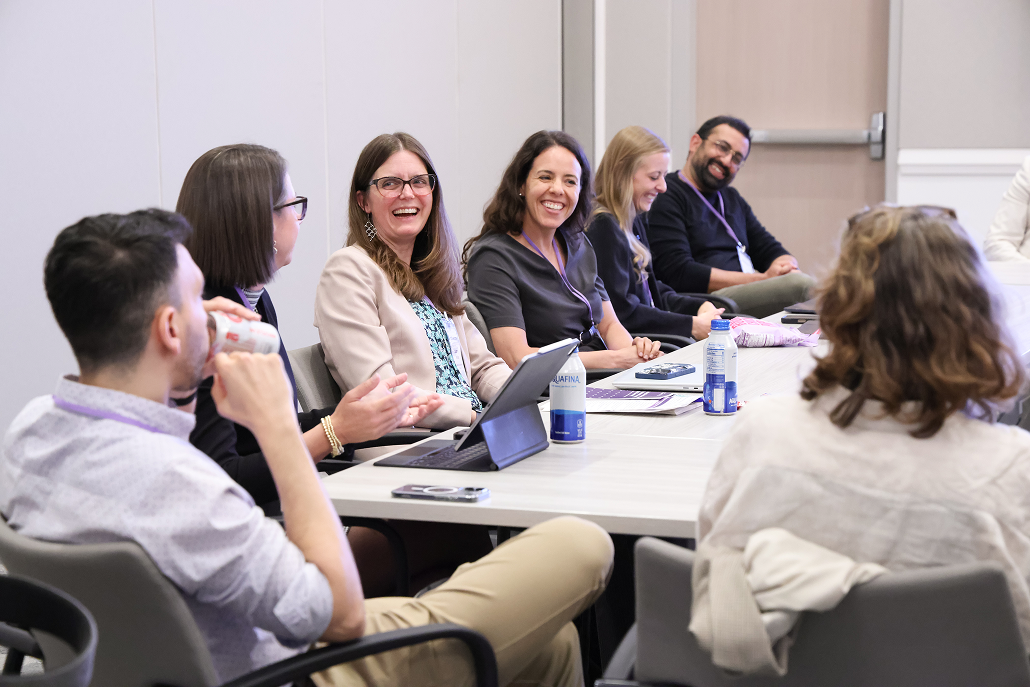
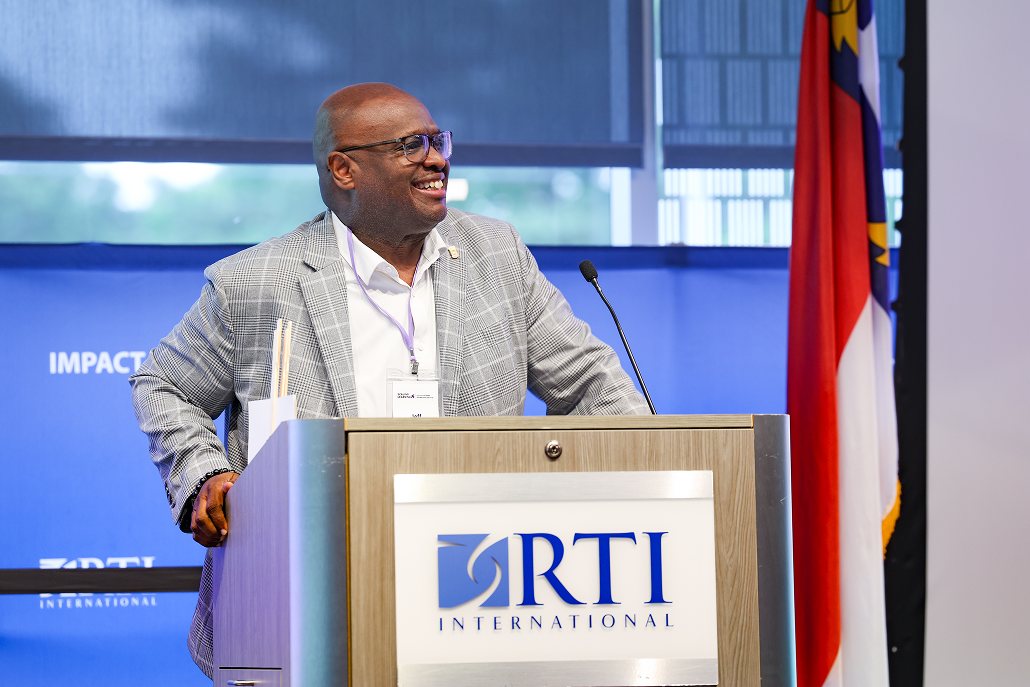
RTI International’s 2026 Scaling Curriculum-Based Professional Learning (CBPL) Convening brought together curriculum publishers, professional learning providers, and national leaders for two days of deep collaboration, reflection, and forward planning at RTI’s headquarters in Research Triangle Park, North Carolina.
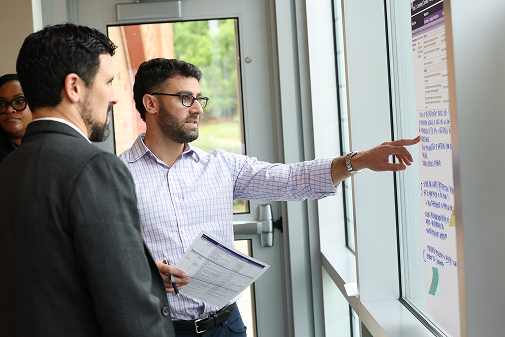
The convening was designed to strengthen strategic partnerships and accelerate the field’s ability to scale high-quality, curriculum-aligned professional learning in mathematics. Through a mix of partner work sessions and targeted learning experiences, participants explored what it takes to move from promising partnerships to sustained, scalable impact.
Grounded in a shared commitment to evidence and outcomes, conversations challenged participants to rethink long-standing assumptions about customization, partnership, and value creation. As a participant noted,
“Service standardization isn’t just what makes scaling possible—it’s what makes impact consistent. The goal isn’t to customize everything, but to deliver what works, with just enough flexibility to meet local needs.”
Across the two days, participants:
- Built and deepened partnerships, with many noting strengthened trust and new cross-organizational connections
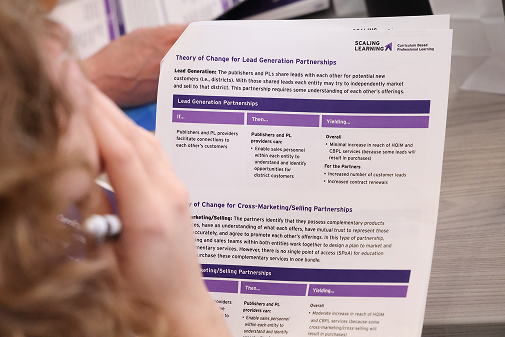
- Gained new knowledge and shared strategies, particularly around partnership governance, journey mapping, and value proposition development
- Identified concrete shifts in practice, including refining service models (80/20 standardization), clarifying success metrics, and strengthening partner alignment
- Committed to next steps, from revisiting go-to-market strategies to launching new collaboration and engagement plans
Feedback reflected both the energy and urgency of the work, with participants highlighting the importance of clear partnership structures, shared definitions of success, and the need to collectively address barriers in district systems and procurement.
By the end of the convening, partners left not only with stronger relationships, but with clear, actionable plans to advance their work by positioning them to deliver more coherent, scalable, and impactful solutions for districts, educators, and students.